
You wake up, look in the mirror, and your eyes are red. Maybe there’s itching, discomfort, or swelling you can’t quite explain. Red eye causes range from harmless irritation to conditions that need same-day care, and knowing the difference is what this guide is for.
The Most Common Red Eye Causes You Shouldn't Ignore
Eye redness happens when tiny blood vessels on the surface of the eye expand and become more visible. In most cases, it’s your eye reacting to something in the environment or a change in daily routine. Here are the most common red eye causes:
- Dry eye syndrome: When tear production is low or tears evaporate too quickly, the eye’s surface becomes irritated and inflamed. Conditions like rheumatoid arthritis can also reduce tear production and lead to persistent redness. Bloodshot eyes after sleep, especially in dry indoor air, are a classic sign.
- Allergies: Pet dander, dust, pollen, and smoke all trigger an immune response that causes itching, swelling, and redness.
- Digital eye strain: Staring at screens reduces blinking, which stresses the cornea and leads to surface irritation.
- Contact lenses: Wearing contact lenses too long deprives the eye of oxygen, causing blood vessels to expand.
- Environmental factors: Wind, chlorine, smoke, and dry air all disrupt the eye’s surface and cause redness.
- Conjunctivitis (pink eye): Pink eye is inflammation of the conjunctiva, the clear membrane covering the sclera and the inner eyelids. It can affect one or both eyes and spreads quickly when caused by viral infections or bacteria.
In most of these cases, red eye symptoms improve with treatment and don’t threaten your vision.
Red Veins in Your Eyes: Causes & What They Actually Mean
Those visible red lines are dilated blood vessels sitting just beneath the conjunctiva. When the eye is irritated, inflamed, or oxygen-deprived from contact lenses, these blood vessels expand to bring more blood to the surface.
This is different from a subconjunctival hemorrhage, where a small vessel breaks and blood pools under the conjunctiva. It looks alarming but is usually harmless and clears up on its own within a week or two, much like a bruise. Our team uses fluorescein staining and slit lamp evaluation to distinguish harmless vessel changes from signs of something more serious.
The concern comes when redness involves the cornea, signals rising pressure near the optic nerve, or appears alongside other symptoms like pain or vision changes. In those cases, the redness is a signal, not the problem itself.
When Red Eyes Are a Warning Sign
Most red eye causes are minor, but some require prompt medical attention. See an eye care professional right away if you notice:
- Eye pain that is sharp, throbbing, or doesn’t let up
- Light sensitivity, especially if it comes on suddenly
- Blurred vision or vision problems that don’t clear up
- Vision changes in one or both eyes
- Swollen eyes or significant swelling around the eyelids
- Redness following an injury to the eye
- Discharge that is yellow, green, or crusty, indicating possible infection
- Redness that gets worse despite over-the-counter treatments
- Symptoms like nausea or headache with eye redness, which can signal glaucoma
Glaucoma develops when pressure builds inside the eye and damages the optic nerve. Acute angle-closure glaucoma causes sudden eye redness, severe pain, and rapid vision changes. It is a medical emergency, and delayed diagnosis can lead to serious complications.
Corneal ulcers and corneal scratches are equally serious. Damage to the cornea causes significant pain, light sensitivity, and a risk of permanent vision problems without timely medical care.
The National Eye Institute recommends seeking care any time symptoms interfere with daily life or do not resolve within 48 hours.
Red Eye Treatment Options That Actually Work
Red eye treatment depends entirely on diagnosis. Here is how the most common red eye causes are managed.
- Dry eye: Preservative-free artificial tears are the first-line treatment. They supplement natural tear production without the irritants found in many standard eye drops. If you’re reaching for drops more than a few times a day, preservative-free artificial tears are the gentler long-term option.
- Allergies: Antihistamine eye drops reduce itching and inflammation caused by pet dander, dust, and pollen. For more severe cases, a primary care provider may recommend an oral antihistamine to complement drops during peak allergy season.
- Conjunctivitis: Bacterial pink eye requires prescription antibiotic drops. Viral conjunctivitis needs rest and supportive care. Over-the-counter treatments can ease discomfort during recovery but will not shorten a viral infection.
- Contact lens irritation: Remove contact lenses immediately and give your eyes time to rest. Your eye doctor may recommend a different lens material or a shorter daily wear schedule to prevent recurrence.
- One important point: redness-relief drops work by constricting blood vessels to reduce visible eye redness quickly. Used regularly, they cause rebound redness and can mask underlying eye conditions that need a proper diagnosis. An eye examination gets you to the right answer faster than cycling through over-the-counter options.
How Milwaukee's Climate Affects Your Eyes
Milwaukee winters are dry. Indoor heating reduces moisture in the air, which cuts into tear production and leaves eyes gritty and red, especially after sleep with your closed eyes in an overheated room. Spring brings tree pollen. Fall brings ragweed. Wind off Lake Michigan is a year-round irritant.
If your eyes turn bloodshot at the same time each year, allergies or dry eye syndrome are likely the cause, not infection. Starting prescription allergy drops two weeks before peak pollen season can prevent most of the irritation before it starts. Knowing your pattern lets your eye doctor build a treatment plan around it rather than reacting to each flare-up.
What to Expect at 414 Eyes for a Red Eye Visit
A red eye appointment at 414 Eyes is quick and straightforward. Your eye doctor will ask about symptoms, contact lens habits, medications, and any other symptoms you have noticed. Then comes the exam.
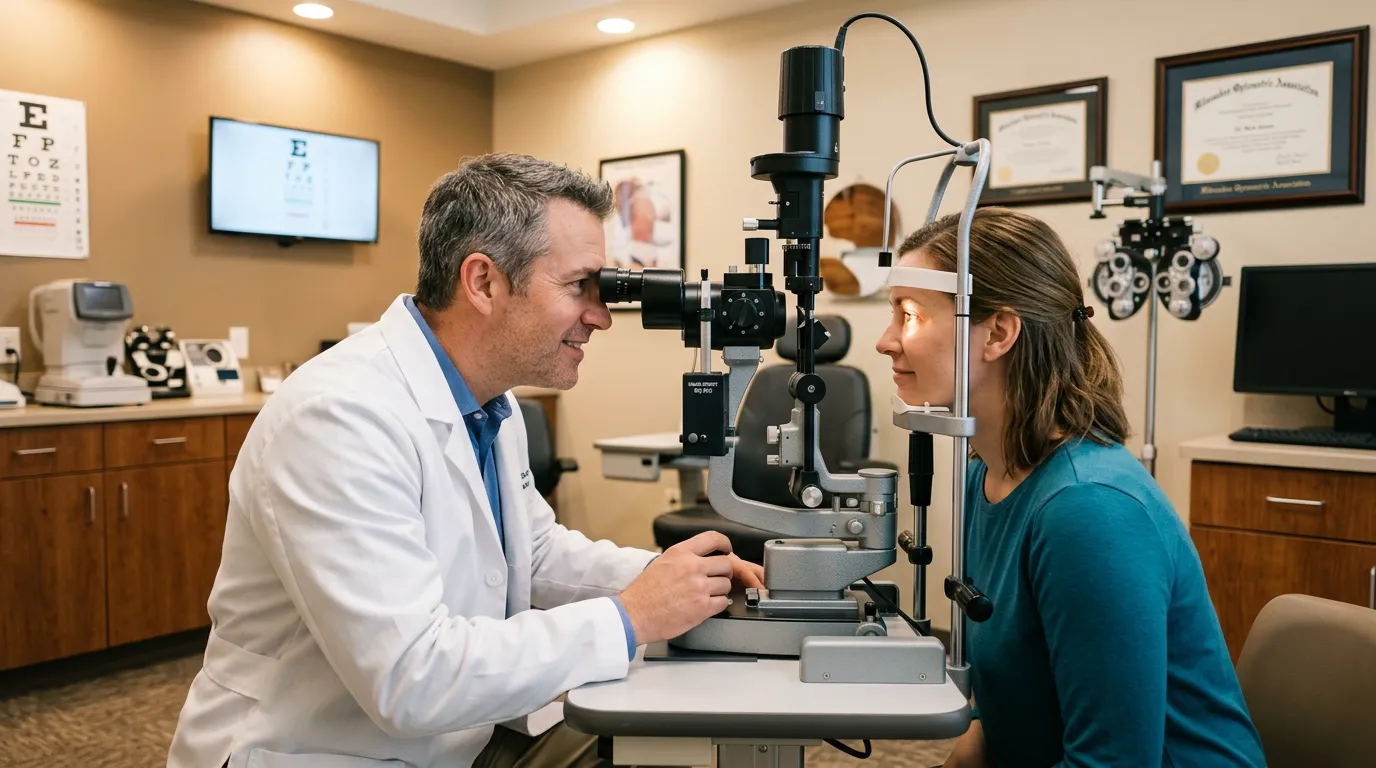
Using a slit lamp, the doctor checks the conjunctiva, cornea, sclera, and eyelids for signs of inflammation, injury, or infection. In some cases, drops help the eye dilate so the doctor can evaluate the optic nerve and rule out pressure-related eye conditions.
You leave with a specific diagnosis and a clear treatment plan for red eye. Persistent redness and vision changes should not be something you manage alone with drops and guesswork.
If your eyes have been red for more than a day or two, or you are unsure what is causing the discomfort, the team at 414 Eyes is here to help. Book an appointment with our Milwaukee optometrists and get a clear answer this week.
FAQs
Can red eyes go away on their own without treatment?
Many minor cases resolve within 24 to 48 hours with rest and small environmental changes, like removing a contact lens or stepping away from smoke. If redness returns repeatedly or does not clear up, booking an exam helps identify the underlying cause before complications develop.
Is it safe to use over-the-counter eye drops every day?
Preservative-free artificial tears are safe for daily use. Redness-relief drops are not. They constrict blood vessels for temporary relief but cause rebound redness with regular use and can hide eye conditions that need proper diagnosis and treatment.
How do I know if my red eye is pink eye or something else?
Discharge, itching, and redness in one or both eyes are common with conjunctivitis, but those same symptoms overlap with dry eye, corneal issues, and other eye conditions. An eye examination is the only reliable way to confirm the diagnosis and get the right treatment.